
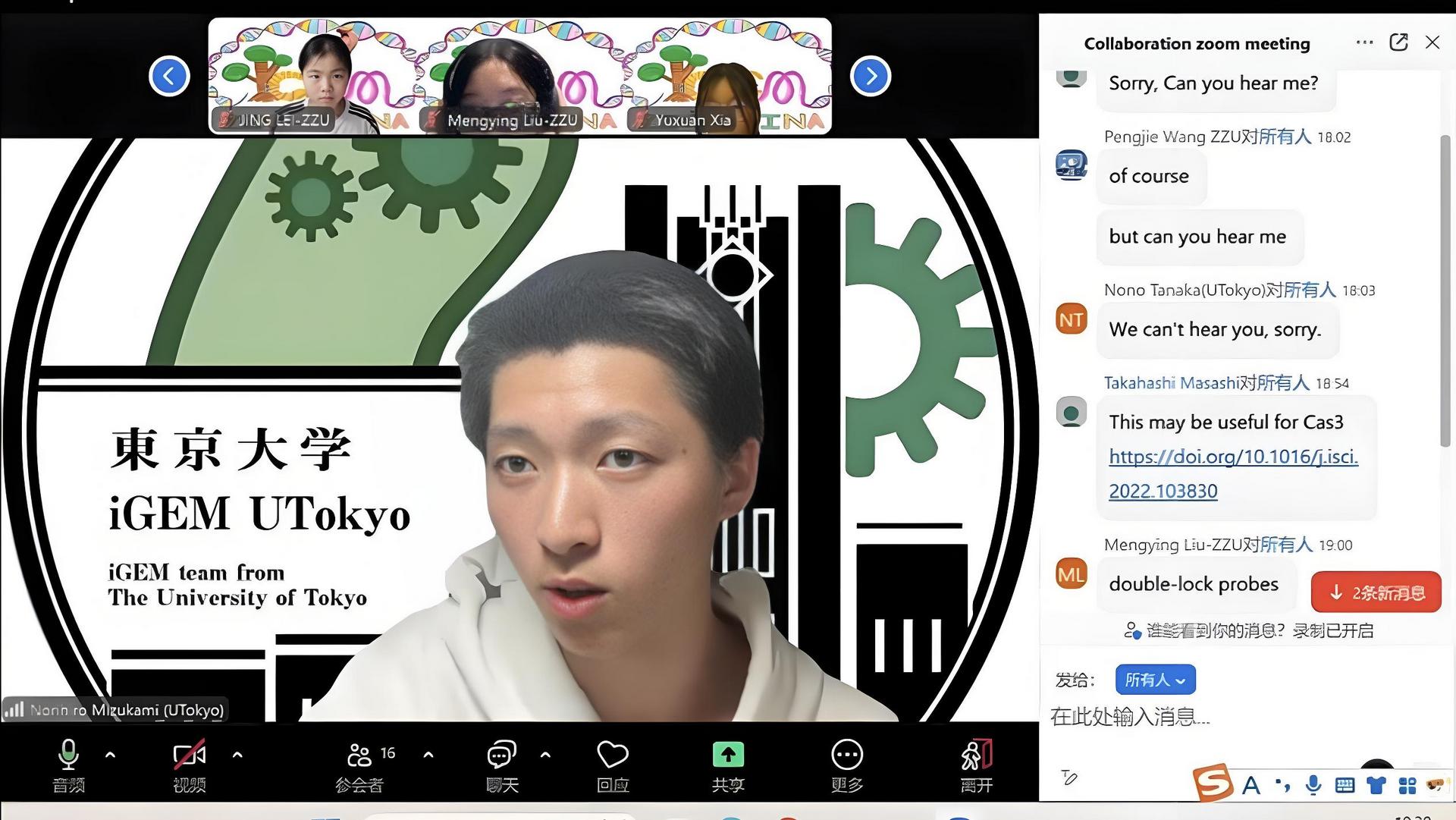
In March 2025, we organized a structured online symposium with several Japanese iGEM teams, focusing on synthetic biology education, project design, and technical implementation. During the session, each team presented their project frameworks, highlighting innovative approaches in diagnostics, biosensing, and public engagement. Our team introduced the early-stage design of our breast cancer exosome detection system, emphasizing the integration of aptamer-based recognition with CRISPR-Cas12a signal amplification. Through in-depth Q&A and breakout discussions, we explored common challenges such as off-target effects, signal-to-noise ratio, and ethical considerations in gene editing. This cross-border dialogue not only expanded our technical perspective but also inspired adjustments in our experimental workflow, particularly in optimizing reagent concentrations and assay conditions. The exchange reinforced the importance of international collaboration in addressing complex biomedical problems using synthetic biology tools.